Your Brain on Motorcycles
The science and spirituality of why we ride.
I was limping down the hallway of the rehabilitation hospital. The hallway was wide, like the halls in my high school. Crowds could easily travel in either direction. I, however, was alone, passing the open doors to rooms where patients in various states of mobility were spending their time. I managed to get to the room I was headed to, and I put on a strong face and tried to ignore the pain as I entered. My mom was there, lying in the bed she had had surgery on her foot a week or two before; she had come to this place to heal. From the first moment she saw me, she knew something had happened. I could tell from her questioning expression that I would have to tell her all the details.
It was the last Sunday in October 2024, a beautiful autumn day, the sun was shining, and it was still warm outside, the perfect day to go riding. I headed out on my Triumph Bonneville T-100 with a matching sidecar and met up with two buddies of mine, Jeet and Griff. I ride often, commuting regularly in and out of D.C., but to ride for the sake of riding is rare for me to find time for. Riding with others made it a special occasion. We rode away from the D.C. suburbs through the twisty roads and farmlands of Maryland, crossing the Potomac at Point of Rocks, over to Harper’s Ferry in West Virginia, and then back across Virginia, headed to Middleburg, and that is when it happened on Lime Kiln Road.
I am still not sure exactly what happened. I was happily riding along last in the group, Jeet and Griff were just down the road but out of sight, when what I could only describe as some supernatural force or hand of God shoved me off the road. It was a small country road with no dividing lines or a shoulder. Next thing I knew, I was out in the grass, and the bike started bucking like a wild horse over the uneven ground. I was thrown off the seat when I came back down; my right foot missed the footpeg, hit the ground, and was dragged backwards under one of the struts that connect the sidecar to the motorcycle's frame. I managed to free it as I slowed down and got back onto the road. I kept riding, though never entirely stopped. As I rode, I started moving my toes in my boot. I could feel them; that was good, my foot was still attached. I was worried about that; the pain had not set in yet. I caught up to the others and told them what happened. From there, I left them to continue the winding roads. I headed home on the relatively straight Route 50, stopping by to visit my mom since it was on the way.
Later that evening, when I took my boot off that’s when it really started to hurt. I couldn’t walk on it; I was confined to the couch with a bag of ice to bring down the swelling. My girlfriend found someone online giving away crutches, which restored some of my mobility. Nothing was broken but, I was walking slowly for the rest of the week.
I didn’t have a bad crash; I can’t even call what happened a crash. I say I had a motorcycling incident, my foot still sometimes hurts, and I had to pay a $400 bill for the X-ray. Things could have been a lot worse. Motorcycles are dangerous, far more dangerous than driving a car, based on the number of people who ride vs those who drive. Motorcyclists are disproportionately involved in fatal crashes. According to the National Highway Traffic Safety Administration, in the United States, over six thousand people died while riding in 2023, with only 3% of registered vehicles being motorcycles; they account for 15% of traffic fatalities. However, studies have found that riding has a positive effect on the rider’s mental and physical health, improving their lives both on and off the motorcycle.
Mark Harris, a twice-retired grandfather working a third career in security, can usually be found on Sunday mornings at a commuter parking lot in Fairfax, Virginia. A large section of the lot is covered in orange traffic cones, and the rumble of large American motorcycles fills the air. The riders navigate through the cone patterns, making complicated, tight turns and doing their best to stay within the confines of the course. The sound of their footrests scraping on the pavement as they turn, leaning the motorcycles further over than everyday use would require. Sometimes they hit the cones, sometimes they drop their bikes. When a bike falls, the other riders often honk their horns or activate their sirens if they have a police motorcycle. This is Cone Camp. Harris started coming to Cone Camp after he had a motorcycle accident while riding in Georgia. To his own admission, it was no one’s fault but his own; he had been fatigued. He started coming out on Sundays as part of a regimen to help build his riding skills after the crash, and felt his abilities were not where they needed to be. Harris describes riding like most riders I have talked to. “I work in an office. I usually try and take a ride during lunch hour or at the end of the day, and it relaxes me. So after a hard day at work, I go for a motorcycle ride, or I meet some like-minded individuals and do some training like this. It’s my Zen Place.”
A Zen place: many riders describe their rides as Zen experiences. I decided to ask an expert on the subject. Rev. Matale Amitha Khema Thero, a Buddhist Monk from the Buddha Meditation Center of Greater Washington, D.C., had just finished a guided meditation for community members of the George Washington University. He had agreed to meet with me to talk about motorcycles and meditation. Thero was dressed in the traditional saffron and maroon robes. Several participants in the meditation bowed to him individually and thanked him, seeking his blessing. After the devotees had their moments with the monk, we went to a meditation room on campus. Before entering, I removed my shoes, and I was relieved that my socks had no holes. Then we sat down to talk about Zen and motorcycles. Thero spoke in a soft, thoughtful voice. He told me he had never ridden a motorcycle but had ridden bicycles in the past. I described to him my own feelings while riding, how it makes me happy and relaxed, how I feel better after a ride, and how motorcyclists consider riding a kind of meditation for them. Thero thought that there are safer ways to meditate, that you cannot ride away from your problems. His thoughts reminded me of my mother’s opinions before I started riding.
Daniela Koran thought she was going to die; she had been diagnosed with cancer. Accepting what she thought was her fate, she decided to live out the remainder of her life eating whatever she wanted, eventually weighing five hundred pounds. But she survived the cancer, and when she started to lose weight, she wanted to do something special for her spouse, who had taken care of her. Daniela had been a mechanic, so she decided to get her spouse's motorcycle running again. She had never ridden before, and after replacing a battery and taking the bike out for a quick test ride, she was hooked. She signed up for the next set of classes and got her motorcycle license. Riding became a form of relaxation for her. “When I'm riding, I am at most at peace in a world because I'm so focused on the task at hand,” She said. “The crap that's in my life that I'm worried about, the, you know, the bills, my spouse's career, the dogs, whatever, all of that just disappears. It's stress-relieving, and I'm just at peace.”
Riding affects the brain; it increases focus, wakes you up like a cup of coffee, and reduces stress. Being a near-50-year-old man, the social media algorithms have fed me ad after ad telling me cortisol was the reason for all my problems: overweight, it’s the cortisol; tired, the cortisol; hair loss; relationship problems; the dog hates you, it’s the cortisol, take this pill, drink this mushroom coffee, and it will fix you and get that cortisol back into balance. What do all these snake oils have to do with Motorcycles? It’s the cortisol.
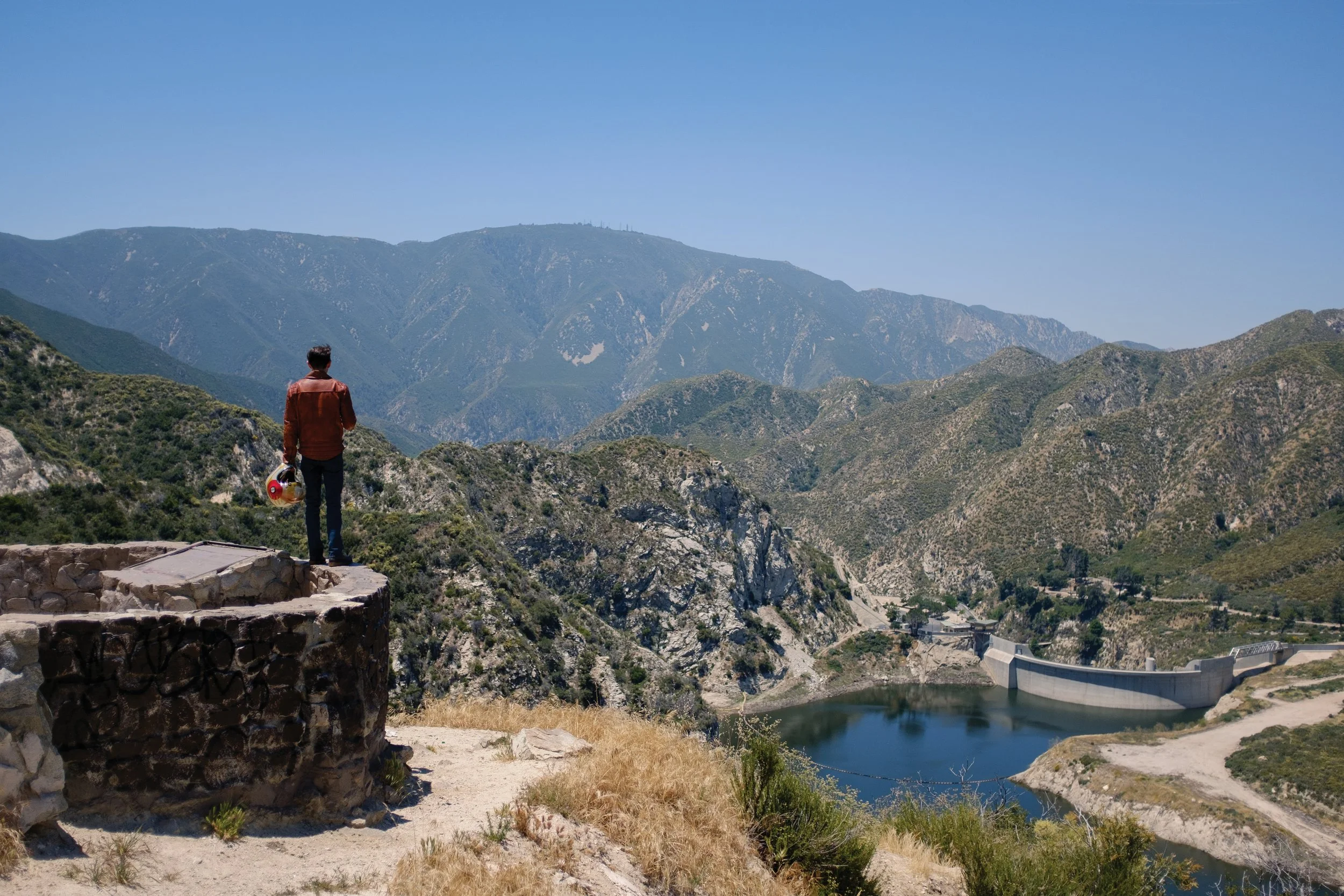
In a study conducted at UCLA and funded by a grant from Harley Davidson, and reported in Brain Research , portable EEG machines were used to measure brain responses in riders, combined with measuring hormonal levels. They compared the subjects while driving a car, sitting by a roadside, and riding a motorcycle. A selection of the test subjects, all experienced riders, were sent to the Angeles Crest Highway, a two-lane road that twists through the San Gabriel Mountains, not far from Los Angeles, and some of the most beautiful roads I’ve ever had the chance to ride on, a favorite escape for the motor inclined Angelenos. I would have happily signed up for this study. They found that riding a motorcycle affected the brain and the body's chemicals differently than when driving a car. Riding created a more focused mindset, as the brain became more visually focused and less susceptible to distracting sounds. The body’s heart rate also increased, like that of light exercise. They also found that stress levels decreased while riding, as measured by the cortisol-to-DHEA-S hormonal ratio, which becomes out of balance during times of chronic stress. Possibly diverting the rider’s attention to the more focused requirements of riding can help distract from everyday stressors.
The riders in the study later self-reported on their own metrics of anxiety and stress, and how riding affected them. They unanimously stated that riding helped with stress or being in a depressed mood. Most respondents said riding helps alleviate anxious moods and tension, and they were evenly divided on whether riding either has no effect or improves insomnia or their intellect. A small percentage said that riding increased their fears, while the rest were split on whether riding had no impact or was beneficial regarding their fears.
What about the riding itself? Sooner or later, every rider will have a close call on the road. Dodging a careless driver, running low on gasoline in remote far West Texas or getting caught out in a sudden storm, finding themselves doing 70 miles per hour with limited visibility, cold rain like needles piercing any exposed skin. I know these experiences firsthand. They sound quite stressful; yet the UCLA study did not find signs of a significant physiological stress response attributable to riding itself. The results of the study showed that, despite the dangers of riding, there is a positive effect on mental health.
In my discussion with the monk, Thero and I also talked about the risks of riding. He thinks that, before riding, particularly if you are young, you should understand the risks, going so far as to visit a hospital and talk to the doctors and nurses about what could happen in an accident. “This is like my enjoyment, okay, then I have to experience, I have to accept these consequences,” Said Thero, he continued “Then, because of that, their mind is that they will take the risk. But I calculated risk. Okay, I need this precious life because I it's really hard to live without a leg”. He also spoke of the golden rule, and if you ride for fun, you should be considerate of others and their safety, just as anyone driving a car should be. As a monk, he had to advise against risky behavior. However, Thero also considered that for some, riding might be the only way to relieve stress, to get away from their chaos, and that others should accept their riding. “If you want to turn it into a meditation instead of taking a risk…which is being present and driving, feeling the bike….the sound, which comes from the bike and…enjoying the surroundings, that you have and you can turn [Riding] into your meditation into that rather than taking it as a risk.”
Mothers and Monks can agree, stay safe, pay attention. Motorcycles might not be for everyone but for some it’s what they need both spiritually and as a scientifically proven stress reliever.